
Overland Adventure Through the Akmola Region, Kazakhstan
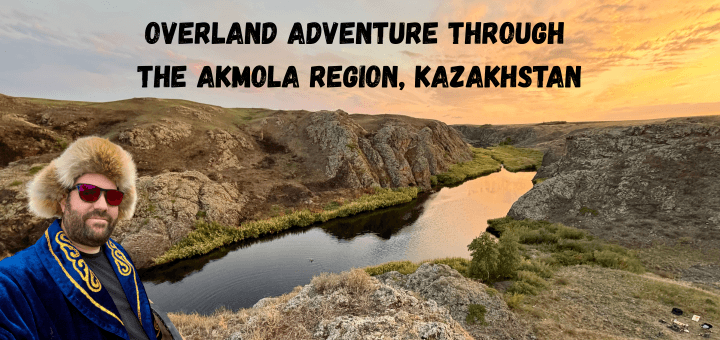
Beyond Kazakhstan’s well-trodden routes, Akmola region is a wild, remote corner of the country where epic landscapes, empty roads and unexpected adventures come as standard.
A place where endless steppe meets forested mountains, where wildlife thrives in protected reserves, and where nomadic traditions remain deeply woven into daily life.
Travelling here by 4×4 is not just a practical choice; it is the best way to experience the region’s remoteness, shifting landscapes, and cultural depth. Over the course of a week, I explored Akmola on an overland adventure that took me from nature reserves and canyons to ethno‑villages, mountain viewpoints and lakeside resorts.
For this journey, I booked my tour through a company called 4×4 Nomads, a group of 4×4 enthusiasts from Kazakhstan who was up for driving us to some of the more remote parts of Akmola Region.
It was a journey shaped by open roads, warm hospitality and a sense of discovery that only grows the further you travel.
Korgalzhyn State Nature Reserve: A Wild Beginning

The adventure began at Korgalzhyn State Nature Reserve, one of Kazakhstan’s most important protected areas and part of the UNESCO‑listed Saryarka Steppe and Lakes.
At the visitor centre, we were greeted by a warm song-and-dance number whilst sweets were lobbed at us from different directions.
The visitor centre was full of information tracking the migration of the flamingos around the world and how they end up in Kazakhstan.
The reserve is known for its vast wetlands, migratory birdlife and striking pink flamingos that gather here in the warmer months.
Driving across the steppe towards Korgalzhyn feels like entering a different world.
One defined by silence, wide horizons and the kind of natural beauty that reveals itself slowly.
It was great to look through the telescope and see the flamingos grazy in the lakelands from a distance.
Exploring the reserve by 4×4 allows you to reach viewpoints and lakes that lie far beyond the main roads.
The wetlands shimmer in the sunlight, and the birdlife is extraordinary, from pelicans and cranes to the iconic flamingos that have become a symbol of the region.
It is a peaceful, grounding place to begin an overland journey, offering a glimpse of Kazakhstan’s ecological richness.
Qazaq Uyi Ethno‑Complex: Beshbarmak and Yurt‑Making Traditions

From the wetlands, the route continued to the Qazaq Uyi Ethno‑Complex, where I spent time learning about traditional Kazakh culture.
The experience included a hands‑on workshop in yurt‑making, guided by local artisans who explained how each part of the structure carries cultural significance. Watching the wooden frame take shape and seeing how felt is layered to create insulation offered a deeper appreciation for the engineering and symbolism behind the nomadic home.
The visit also included a meal of beshbarmak, Kazakhstan’s national dish. Served with boiled meat, flat noodles and a rich broth, beshbarmak is traditionally eaten with the hands and shared among guests.
Sitting around a low table, listening to stories about nomadic life and tasting the dish in its authentic form was one of the most memorable cultural moments of the trip.
It was also a chance to try the altybakan, a Kazakh-style swing that needs two volunteers to get going. And a chance to try Kazakh-style archery, which was great fun.
Now the big question: should I buy a Yurt?
Sokolinyye Gory: The Falcon Mountains of Buiratau National Park

The next stage of the journey led into the Sokolinyye Gory, or Falcon Mountains, part of the Buiratau State National Nature Park.
The terrain here shifts dramatically from open steppe to rocky hills and forested slopes.
The 4×4 handled the rugged tracks easily, making it possible to reach viewpoints and trails that would otherwise be inaccessible.
The Falcon Mountains are known for their wildlife, including birds of prey that soar above the cliffs.
Hiking through the park reveals granite formations, quiet valleys and panoramic views that stretch across the region. I am running a few minutes late; my previous meeting is running over.
It is a place where nature feels untouched, and where the silence is broken only by the wind and the occasional call of a falcon. Fantastic echo here.
Ethno‑Village Visit: Living Traditions of the Steppe

Another highlight was visiting a local ethno‑village, where families preserve and share traditional Kazakh customs.
These villages offer an intimate look at daily life, from handicrafts and music to food preparation and animal husbandry.
Meeting local nomadic residents, hearing their stories and seeing how traditions are passed down through generations added a human dimension to the journey.
The hospitality was warm and genuine, with tea served in ornate cups, homemade sweets offered generously and conversations that stretched long into the afternoon.
It was a reminder that cultural heritage in Kazakhstan is not confined to museums; it is lived, shared and celebrated. And in an ever-growing, modernising world, it’s important to protect this.
They did have a Starlink, which I found pretty cool!
Bestobe Canyon: Along the Selety River

Driving deeper into Akmola brought me to Bestobe Canyon, carved by the Selety River. This was a highlight of the trip for me; be sure not to miss it.
The canyon is one of the region’s most dramatic natural landmarks, with steep cliffs, winding riverbanks and viewpoints that showcase the scale of the landscape.
The 4×4 made it possible to navigate the rough terrain and reach areas where the canyon opens into wide, sweeping vistas.
Just as we arrived, a herd of over 2,000 horses galloped past our 4×4 convoy- what a magical moment.
If you can aim to make it here for sunset, you won’t be disappointed.
Standing at the edge of Bestobe Canyon, watching the river cut through the rock far below, was a moment that captured Akmola’s wildness.
It is a place that feels remote and untouched, perfect for photography, hiking, or simply taking in the scenery.
You can also go in for a dip in the lake if you’re brave enough.
Les Hotel & Resort: A Forest Retreat in Borovoe

After days of exploring remote landscapes, arriving at Les Hotel & Resort in Borovoe felt like stepping into a peaceful forest retreat.
Surrounded by pine trees and fresh mountain air, the resort offers a comfortable base for exploring the Burabay National Park area.
The rooms are cosy, the atmosphere calm, and the location ideal for accessing nearby lakes, trails and viewpoints. Be sure to check out the glass or dome rooms for a unique stay experience.
Borovoe, also known as Burabay, is one of Kazakhstan’s most beloved nature destinations, and Les Hotel provides a perfect balance of comfort and proximity to the outdoors.
Aqmaral Breeding Farm and Ethno‑Village Visit

The journey continued with a visit to the Aqmaral breeding farm, where I learned about local livestock traditions and the role of animal husbandry in Kazakh culture.
It was great to meet the large herds of deer they have here.
The farm also includes an ethno‑village, offering another opportunity to connect with traditional crafts, music and food.
The lunch was excellent here; my favourite dish was the pilaf rice dish made with deer meat, delicious.
Seeing how communities blend modern farming with cultural preservation was fascinating, and the visit offered insight into rural life in Akmola.
Abylai Khan Meadow: A Place of Legend

One of the most historically significant stops was Abylai Khan Meadow, named after the revered Kazakh leader Abylai Khan.
The meadow is tied to legends and stories of leadership, unity and cultural identity.
Walking through the open grassland, surrounded by hills and forest, it is easy to imagine the gatherings and events that once took place here.
The site carries a sense of calm and reverence, making it a meaningful stop on the journey.
Hike to the Bolektau Viewpoint

From the meadow, I hiked to the Bolektau Viewpoint, one of the most iconic vantage points in Burabay.
The trail climbs steadily through forest and rocky terrain before opening onto a panoramic view of Lake Burabay, the surrounding mountains and the distinctive rock formations that define the region.
The viewpoint is breathtaking, offering a sweeping view of Akmola’s lakes and forests.
It’s not a difficult climb up, and a soon-to-be-completed path will guide you to the top easily.
It is a must‑visit for hikers, photographers and anyone who appreciates dramatic landscapes.
Lake Burabay: Ferry Excursion Across the Water

To experience Burabay from a different angle, I took a ferry across Lake Burabay.
The water is calm and reflective, surrounded by forested hills and granite cliffs.
From the ferry, you can see the famous rock formations rising from the lake, including the iconic Zhumbaktas rock, which resembles a mysterious human profile. I’m more in favour of it looking like the Toblerone chocolate bar.
The boat trip is relaxing and scenic, offering a peaceful way to enjoy the lake’s natural beauty.
Wyndham Garden Burabay Hotel: A Comfortable Finish

The final stop of the journey was the Wyndham Garden Burabay Hotel, a modern and comfortable place to unwind after a week of overland exploration.
The hotel offers spacious rooms, excellent facilities and easy access to Burabay’s attractions.
If you’re lucky, the higher rooms offer a balcony view of Lake Burabay, and you can even go on walking trails around the hotel grounds.
It was the perfect place to reflect on the adventure, recharge and enjoy a final evening in the Akmola region.
The highlight has to be the swimming pool, Finnish sauna, Russian sauna and steam room that guests can use. A perfect way to refresh and wind down after a long week of off-roading.
The Georgian restaurant on the top floor is also worth mentioning, especially if you want to get your Khachapuri fix.
A Journey Through Nature, Culture and Open Roads

Travelling through the Akmola region by 4×4 is an experience shaped by vast landscapes, cultural encounters and the freedom of the open road.
From nature reserves and canyons to ethno‑villages, mountain viewpoints and lakeside retreats, the journey reveals the diversity and depth of Kazakhstan’s heartland.
Thank you for joining me on this adventure.
I hope you have a wonderful experience travelling around Kazakhstan and exploring the Akmola region, a place where nature, culture and history come together in unforgettable ways.
Watch my YouTube video of the Akmola Region, Kazakhstan.



 Travelling the world, one adventure at a time. Follow Dave Brett, a solo adventure travel blogger on his travels around the world. A globe-trotting adventure travel blog featuring travel tips and advice, travel stories, travel videos and travel photography that will inspire your next trip abroad, and help you plan it too. To read more, please visit: