
GigSky eSIM for Cruises: Stay Connected at Sea
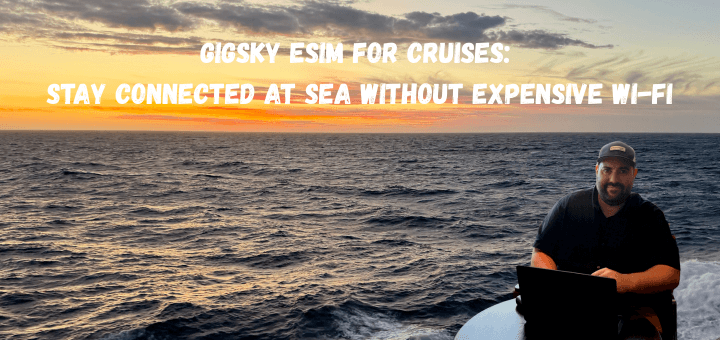
If you think eSIMs only work on land, think again; they can also work at sea!
One of the biggest surprises on my recent cruise was discovering I could stay connected not just in port, but also while sailing on open water.
Thanks to GigSky‘s cruise package, which uses the Maritime network, I could check emails, send WhatsApp messages, and stay in touch with friends and family without relying entirely on the ship’s often expensive Wi-Fi.
It was also easy to set up in advance so that I could stay connected while out at sea.
Long are the days of waiting until you reach port for your local EU data plan package to kick in, or running to the spot that offers free port WWi-Fi
For frequent cruisers, staying connected can be one of the most frustrating parts of a voyage.
Cruise line internet packages have improved in recent years, but they can still come with eye-watering price tags, especially if you’re sailing for a week or longer.
That’s where GigSky’s cruise-focused eSIM plans offer an interesting alternative.
Can You Really Use an eSIM on a Cruise Ship?

The short answer is yes. Yes, you can! And it’s pretty amazing.
GigSky offers dedicated Cruise + Land and Sea-Only eSIM plans that connect to supported maritime networks while you’re at sea and automatically switch to local mobile networks when you’re in port.
The service works across more than 290 cruise ships and in over 200 destinations worldwide.
This means you can install a single eSIM before your holiday and remain connected throughout your journey without changing SIM cards or purchasing separate plans for different countries.
According to GigSky, the system automatically moves between maritime and land-based networks as your ship travels offshore and returns to port.
If you have an EU data roaming package like me, you can toggle between your cruise-ship-only data and your normal SIM when you’re in port, or get the cruise+land package and keep it on without switching at port.
For travellers accustomed to hunting for free Wi-Fi in every port or paying premium onboard internet fees, that convenience alone is a major advantage.
My Experience Using GigSky at Sea

I’ll admit I was sceptical at first. Surely this won’t work? Why isn’t anyone else using this?
Like many travellers, I’d always associated eSIMs with city breaks, road trips, and international travel on land.
The idea that an eSIM could function in the middle of the ocean seemed almost too good to be true.
However, after activating GigSky before departure, I found the setup refreshingly straightforward.
Once the ship moved far enough offshore, my phone connected to the maritime network and data worked exactly as expected.
No complicated setup.
No swapping SIM cards (Unless you want to when at port).
No queues at guest services trying to troubleshoot internet problems.
The connection was more than adequate for the things I actually needed during the trip:
– Checking emails
– Sending WhatsApp messages
– Browsing websites
– Staying in touch with family on the ship, arranging meet-up times at sea.
– Looking up information before arriving in port
– Managing travel bookings
– Looking up the answers for the ship pub quiz.
For my travel style, that’s exactly what matters.
I’m not trying to stream films all day while cruising across the Caribbean. I want reliable access to communication and essential information.
GigSky delivered that.
Why Cruise Ship Wi-Fi Can Be So Expensive

(My cruise charged £30 per day for a Wi-Fi package! I could get 1GB for a whole week for less with GigSky cruise data plan)
If you’ve cruised before, you’ll know the feeling.
You board the ship, connect to the onboard network, and then discover that internet access costs considerably more than you expected.
While pricing varies by cruise line, internet packages can often become one of the most surprising expenses on a voyage.
Many cruise passengers end up spending a lot to stay connected for a week or a month-long trip.
Personally, I use my personal roaming data SIM only once it kicks in at port and I can connect to the local network. This means I’m completely offline when at sea to avoid paying high maritime data fees.
What makes the situation even more frustrating is that many travellers don’t actually need unlimited data or constant streaming access.
They want to message friends and family on the ship, check emails, and occasionally browse the web.
That’s where a maritime eSIM begins to make a lot of sense.
Better Value Than Traditional Cruise Internet: The biggest win for me was value.
My 7-day, 1GB GigSky plan cost roughly just under the same as a single day of some cruise ship Wi-Fi packages.
Let that sink in for a moment.
A week of connectivity for about the cost of one day onboard.
For light users, that’s an impressive saving.
Of course, your needs may vary.
If you’re planning to upload YouTube videos, stream television programmes, or spend hours scrolling social media feeds every day, you’ll likely require more data. However, for travellers who want to remain reachable and connected, I found the plan more than sufficient.
Personally, I leave the big data jobs to the port WI-FI when we dock.
Throughout the cruise, I comfortably used data for messaging, email, and regular travel-related tasks without feeling restricted.
I’ve also found the ship Wi-Fi package to be slow, as speeds depend on how many users opt for the internet package, and the ship reduces speed to support a large user base.
With a GigSky ship eSIM, it works directly with maritime networks, meaning a smoother, faster connection.
The Convenience of Cruise + Land Plans

One feature that particularly appeals to frequent travellers is GigSky’s Cruise + Land package.
Instead of buying two separate package solutions for your cruise and your destinations, the Cruise + Land plan provides coverage both onboard and ashore.
GigSky states that the eSIM automatically switches from the ship’s maritime network to supported local mobile networks when you arrive in port.
Super easy to use and set up.
That means you can:
– Stay connected during sea days
– Use data while exploring ports
– Access maps and navigation ashore
– Book transport and excursions
– Communicate with fellow travellers
– Avoid juggling multiple SIM options
As someone who prefers simple travel solutions, that is a huge benefit.
Travel is complicated enough without switching mobile networks every time your ship docks somewhere new.
Things to Know Before You Set Off and cruise

As with any cruise connectivity option, a few practical considerations apply.
GigSky notes that maritime networks generally become available when the vessel is more than approximately 12 nautical miles from shore and may disconnect as ships approach port.
Temporary interruptions can also occur due to weather, geography, or network congestion.
In my experience, these transitions were simply part of the normal cruise environment and weren’t particularly disruptive.
It’s also worth remembering that ship apps often still require the vessel’s onboard Wi-Fi network to function properly.
GigSky specifically notes that onboard cruise applications may need a connection to the ship’s local Wi-Fi system.
So when you want to check your ship bill, turn on your Wi-Fi and connect to the ship’s system to access those parts of the app, then turn it off when you want your GigSky eSIM to work.
Is GigSky Worth It for cruises?

If I could stay offline for the whole trip, I would. Limiting my connection to 1GB and sticking with a basic plan can help with emergencies and basic communication while on the cruise, all for a great price.
The combination of affordability, convenience, and reliable connectivity made it one of the most useful travel tools I packed for my cruise.
Instead of worrying about Wi-Fi costs, searching for hotspots in every port, or going completely offline for a week, I had a simple, cost-effective way to stay connected whenever I needed it.
Most importantly, it helped strike the perfect balance.
I wasn’t constantly glued to my phone, but I could check in with family, manage travel plans, and handle essential communication whenever necessary.
That’s exactly what I want from a travel connectivity solution.
Final Thoughts on GigSky

Cruise travel is supposed to be relaxing, and staying connected shouldn’t cost a lot.
GigSky’s maritime network offers a practical alternative to traditional cruise ship Wi-Fi, letting passengers stay connected at sea and in port with a single eSIM.
After using GigSky on my recent cruise, I came away impressed by how easy it was to set up and how well it performed for everyday travel needs.
Whether you’re heading off on a Caribbean adventure, a Mediterranean voyage, or an expedition cruise further afield, it’s well worth considering before you sail.
If you’re planning your next cruise and want a more affordable way to stay online, check out GigSky’s Cruise + Land and Maritime eSIM options.
Bonus: Use code DAVE1014 to get 25% off your first GigSky eSIM purchase.
Happy cruising, and happy connecting with GigSky!





 Travelling the world, one adventure at a time. Follow Dave Brett, a solo adventure travel blogger on his travels around the world. A globe-trotting adventure travel blog featuring travel tips and advice, travel stories, travel videos and travel photography that will inspire your next trip abroad, and help you plan it too. To read more, please visit: